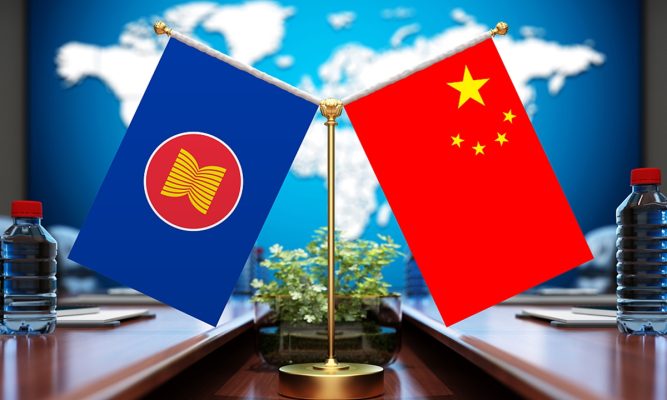


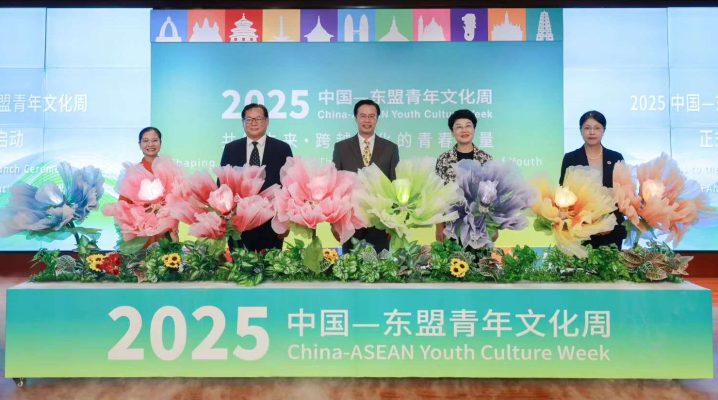
On 25th September 2025, I had the honor of attending the Opening Ceremony of the 2025 China–ASEAN Youth Cultural Week in Beijing.
Over the past three decades, China–ASEAN relations have evolved from dialogue to a Comprehensive Strategic Partnership, becoming one of the most successful examples of regional cooperation in the Asia-Pacific.
Despite the uncertainties and challenges facing the world today from geopolitical competition to economic and technological transformations, I remain optimistic because both sides continue to demonstrate a strong commitment to resolving differences through dialogue and cooperation.
As an ASEAN youth currently studying in China, I have come to believe that the future of China–ASEAN relations will not be shaped solely by agreements or leaders. It will also be shaped by the connections built between people, especially among young generations.
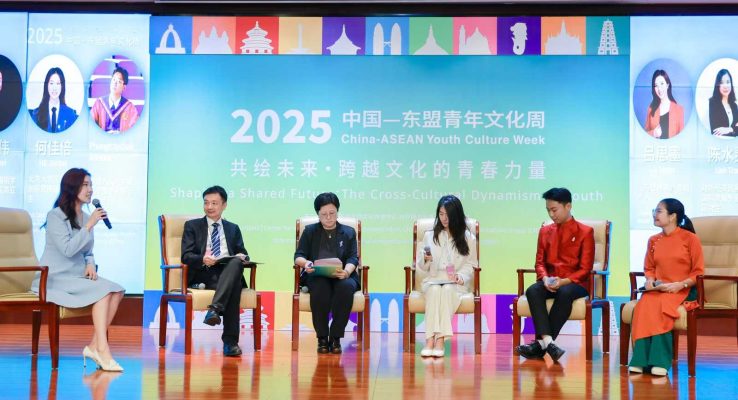
During the event, I had the opportunity to participate in an intergenerational dialogue under the theme:
“Asking the Way of Youth: Following the Light Toward a Shared Future for China–ASEAN Youth.”
One of the questions raised during the discussion was:
As members of the younger generation, in what areas of China–ASEAN cooperation would you like to participate? What qualities and skills are needed for young people to contribute more effectively to China–ASEAN cooperation and to the development of the Global South as a whole?
It was a question that inspired deep reflection.
People Are the Foundation of Sustainable Cooperation
In my remarks, I referred to a well-known Chinese proverb:
“If you want one year of prosperity, grow grain.
If you want ten years of prosperity, grow trees.
If you want one hundred years of prosperity, grow people.”
Language Is the Shortest Bridge
I believe that one of the most important capacities for young people today is cross-cultural communication.
In an increasingly interconnected world, the ability to understand and respect differences is just as important as any professional skill. One of the most effective ways to cultivate this capacity is through learning each other’s languages and cultures. Language is the shortest bridge that brings people closer together.
As someone who loves traveling, I always encourage young people from China and ASEAN countries to explore more, travel more, and engage directly with local communities rather than relying solely on books or social media to understand one another. 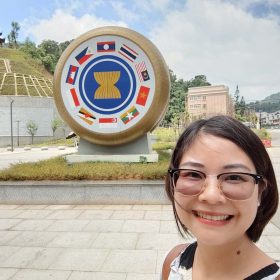
I vividly remember a meaningful experience from last year. Instead of flying back to China from Vietnam as I usually did, I decided to cross the border by road through Jingxi in Guangxi. At the border port, I was struck by a large ASEAN symbol standing prominently before me. At that moment, I felt a powerful sense of connectivity between China and ASEAN. Shortly afterward, a Chinese family I met offered me a ride from the border to the city and even helped me find a suitable hotel. It was a very small act.
 Yet that simple kindness left a deep impression on me and reminded me that friendship between nations often begins with small gestures between ordinary people.
Critical Thinking in the Digital Age
Alongside cross-cultural communication, I believe that young people today must also cultivate critical thinking.
We live in an era shaped by artificial intelligence, algorithms, and social media. Information has never been more abundant, yet it has also never been more complex. Misinformation, fake news, and online stereotypes can quickly create misunderstandings between countries and communities.
Without the ability to evaluate information critically and think independently, we risk becoming trapped by prejudice and one-sided narratives. Critical thinking enables us not only to approach truth more objectively but also to safeguard trust, mutual respect, and meaningful dialogue across cultures.
From Awareness to Action
However, understanding alone is not enough. What matters even more is action.
We often assume that contributing to peace or international cooperation requires grand achievements. In reality, every meaningful journey begins with small steps.
It may mean learning a new language. It may mean making friends with someone from a different cultural background. It may mean participating in an international exchange program. Or simply being willing to listen to perspectives that differ from our own.
When carried out with sincerity and a commitment to a shared future, these seemingly small actions can generate profound and lasting impacts.
The Future Belongs to a Generation That Chooses Dialogue
In 2023, when launching the Global Civilization Initiative, President Xi Jinping emphasized the importance of equality, mutual learning, dialogue, and inclusiveness among civilizations – allowing cultural exchanges to transcend estrangement, mutual learning to transcend clashes, and inclusiveness to transcend any sense of superiority.
Although we come from different countries and cultures, I believe that young people across China and ASEAN share many common aspirations: development, peace, opportunity, and a more sustainable future.
The future of China–ASEAN relations will not be built solely in conference rooms or at negotiating tables. It will be built in classrooms, through journeys, conversations, collaborative projects, and friendships formed among young people today.
As an ASEAN youth, I hope to continue serving as a small bridge connecting China and ASEAN. Because I firmly believe that before countries become partners, people must first become friends.
And every friendship begins with dialogue.
- An Encounter Beyond Expectations: When Life, Ecology, Art, and Philosophy Converge
- From Energy to the Middle Corridor: Prospects for Strategic Cooperation between Vietnam and Azerbaijan
- Doctoral Dissertation Proposal at the University of International Business and Economics (UIBE), Beijing, China (2023–2027)
- People-to-People Exchanges: Linh Tran’s Perspective on ASEAN–China Cooperation
- May 2026 Reflection: When the Streams Converge
Bài viết cùng chủ đề:

Why I Became a Teacher?

BAMBOO and I

From Energy to the Middle Corridor: Prospects for Strategic Cooperation between Vietnam and Azerbaijan

Vietnam Bamboo and Sustainable Development Field Study Program

Dialogue on the Future of ASEAN–China Relations: The Role of Youth in Building Trust and Cooperation

People-to-People Exchanges: Linh Tran’s Perspective on ASEAN–China Cooperation

An Encounter Beyond Expectations: When Life, Ecology, Art, and Philosophy Converge