

“Why, among so many choices in life, did I choose bamboo?”
This is a question I sometimes ask myself, but the answer does not come easily or immediately. If I look back to nearly ten years ago, I myself would never have imagined that bamboo would become such an important part of my life.
I was born and raised in Vietnam — a country where bamboo is present almost everywhere. Bamboo appears in poetry, fairy tales, historical stories, and in the cultural memory of many generations of Vietnamese people. I still remember the lines from Tre Việt Nam (The Vietnamese Bamboo) by the poet Nguyễn Duy, a poem that almost every Vietnamese student has read:
“Green bamboo, since when have you been green?
Since ancient times, there have been green bamboo hedges…”
Bamboo is so familiar that people almost stop noticing it. And so did I.
Throughout my youth, I was more drawn to the world beyond Vietnam. I had the opportunity to study and live in different countries. Each place I passed through opened up new ways of seeing people, culture, and development. I loved the feeling of discovering the unknown, meeting people from different cultural backgrounds, and seeing the world from many perspectives.
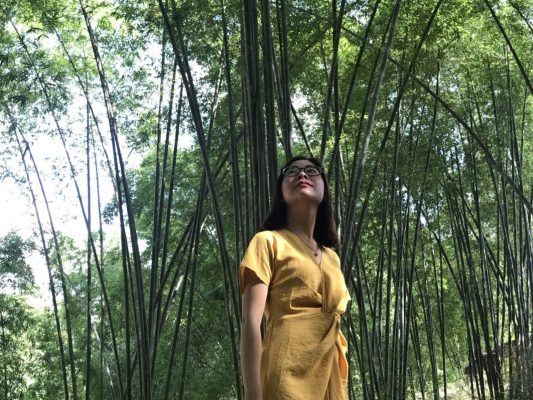
I visited the famous Arashiyama Bamboo Grove in Kyoto, Japan several times. I also lived in China, where bamboo is deeply present in art, literature, and everyday life. But at that time, bamboo was still only part of the scenery for me. I saw its beauty. But I did not truly understand it. And I never imagined that one day, bamboo would change my life.
Everything truly began when I returned to Vietnam in 2017.
It was a very special period in my life. After many years of studying abroad, I came home with many experiences, many ideas, and a strong desire to contribute to my country. Yet at the same time, I also felt lost.
When I was abroad, every journey was a process of discovery. I learned new things, met people from different cultures, and expanded my worldview.
But when I returned home, I had to face very practical questions.
What should I do?
Where do I belong?
What is truly meaningful for my life?
I still remember once enthusiastically telling my mother about the journeys I had taken and the international experiences I had gained. She simply smiled and said: “Wasn’t that just traveling for fun?”
I knew she did not mean to hurt me. But her words made me think deeply. Because for me, those journeys were never just about traveling for fun. They were how I learned about the world. They were also how I learned about myself and grew as a person.
Perhaps many people who have studied abroad understand this feeling. When we return to our homeland, we realize that we have changed a great deal. Yet at the same time, we do not always know where to place those experiences within real life.
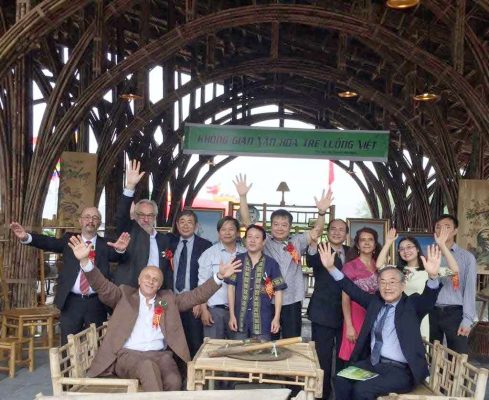
It was during this period of searching for answers that I had the opportunity to join the Thanh Tam Bamboo Eco-Park project in Thanh Hoa. At first, it was just a job. But looking back, it was probably one of the most important turning points in my life.
What attracted me to the project was not the salary or the job title, but the idea and the vision: the idea that a familiar plant like bamboo could help create livelihoods for local people and tourism development, and the vision that this same plant could contribute to environmental protection, and sustainable value creation for communities.
More importantly, I had the opportunity to work with people whom I deeply respected. Their dedication to bamboo, together with their belief in the role of bamboo in building a sustainable future and a more harmonious relationship between humans and nature, became a great source of inspiration for me.
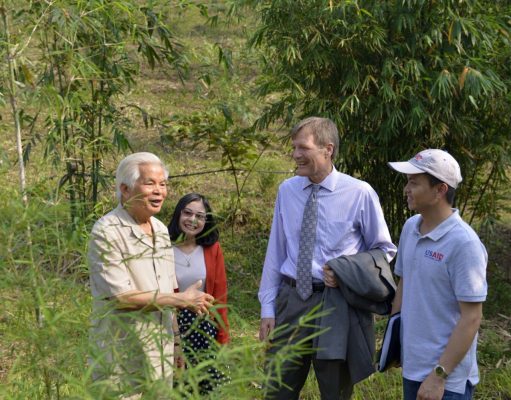
Through that project, I did not only learn about bamboo. I learned about development. I learned about community. I learned about leadership. I learned how to turn an idea into reality. And above all, I learned how to connect diverse resources and people toward a shared purpose. From that moment on, bamboo began to enter my life in a much deeper way.
At first, I saw bamboo as a solution for sustainable development. Bamboo grows quickly. It is environmentally friendly. It can create livelihoods for local people. It can be used in architecture, handicrafts, education, music, tourism, and many other fields.
But the deeper I went, the more I realized that bamboo is not merely a plant. Bamboo is culture. Bamboo is memory. Bamboo is art. And above all, bamboo is connection.
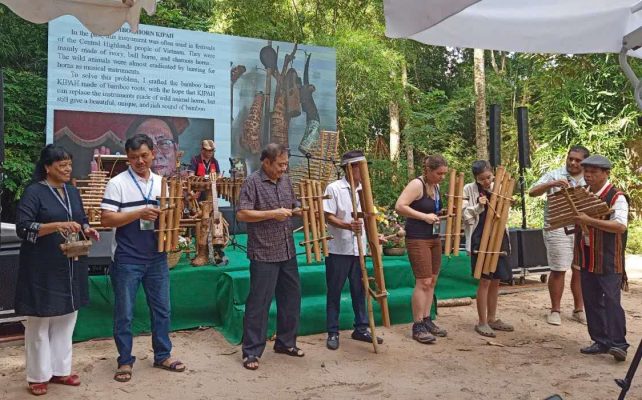
Since 2018, I have begun participating in the activities of the international bamboo community through the World Bamboo Organization. Thanks to bamboo, I have had the opportunity to meet bamboo friends from all over the world. Some are researchers. Some are architects. Some are artists. Some are entrepreneurs. Some work in community development.
They come from different countries, languages, cultures, and background. Yet they can all sit together because of a shared love for bamboo, shared values, and a common belief in the power of bamboo as a sustainable material with the potential to transform communities and the world.
This made me think deeply. In a world that is increasingly polarized and divided, what allows people to trust one another, cooperate, and build something meaningful together?

I began to realize that the greatest value of bamboo does not lie only in the bamboo itself. Its greatest value lies in its ability to connect people. It was through these experiences that I began to see bamboo in a much deeper and more meaningful way.
I saw that bamboo grows in clusters and forests, not in isolation. Beneath the ground, its roots are connected in a shared network. Each bamboo stalk can stand on its own. But no bamboo truly exists alone.
This made me think of human beings. No one grows alone. No one succeeds alone. We need family, friends, teachers, colleagues, and companions on the journey of life.
I saw that bamboo is flexible, but not weak. When strong winds come, bamboo does not resist with rigidity. It bends. And when the wind passes, it stands upright again. Bamboo taught me that adaptation does not mean giving up one’s principles. Sometimes, flexibility is itself a form of strength.
I saw that bamboo is hollow inside, yet still grows tall. This reminded me of humility. The more I learn, the more I realize how much I still do not know. And if we are too full inside, there will be no space left to learn anything new. 
I also learned from bamboo the lesson of patience. Some species of bamboo spend many years developing their roots. Above the ground, almost nothing seems to change. But beneath the surface, a foundation is being formed. Once the roots are strong enough, growth can happen very quickly.
This is very similar to life. There are years when we study, accumulate experience, build relationships, and cultivate trust. These things may not bring immediate results. But they are the roots that support future growth.
Of course, my bamboo journey has not always been smooth. There were projects that did not succeed as expected. There were efforts that went unrecognized. There were differences in perspectives, interests, and ways of working. There were moments when I wondered whether I was truly on the right path.
But those experiences helped me understand bamboo more deeply. Bamboo is not only beauty. Bamboo is also resilience. To go far, we must be persistent. To build trust, we must keep our word. To connect people, we must begin with sincerity.
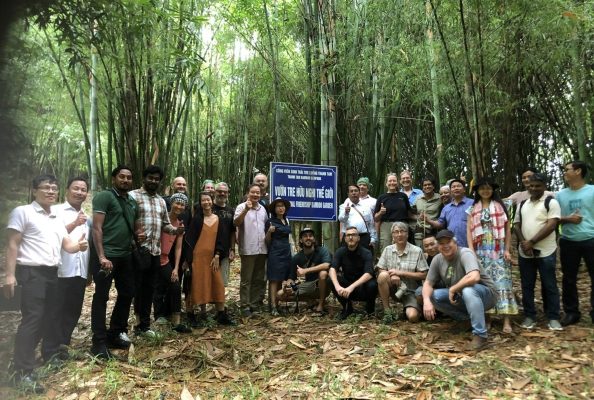
Over time, bamboo was no longer just a field of work. It became part of how I see life. If I had to summarize my bamboo philosophy in a few simple sentences, I would say:
Be gentle, but not weak.
Be adaptable, but do not lose your values.
Build strong foundations, even when no one can see them.
And always remember that we go further when we know how to connect with and support one another.
From these lessons, I began to see more clearly the path I wanted to follow. I do not want to work with bamboo only as a product or an industry. I want to use bamboo as a bridge.
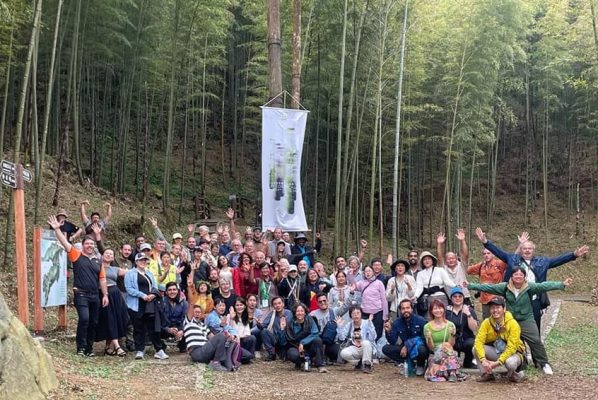
A bridge between people.
Between Vietnam and the world.
Between culture and development.
Between academia and practice.
Between human beings and nature.
Recently, I have begun to call this journey by a very personal name: 水灵竹道 – Linh Tran’s Way of Bamboo. 
水 means water — reminding me to live with softness, adaptability, and embracing.
灵 means both spirit and flexibility — reminding me to listen to my intuition, preserve inner clarity, and remain adaptable in the face of change.
竹 means bamboo — reminding me of resilience, humility, integrity, and connection.
道 means the way — reminding me that this is not a short-term goal, but a lifelong journey.
Some people may think this name sounds too grand. But to me, its meaning is very simple. It is not a doctrine. It is not a great ambition. It is simply the name I give to the path I am walking: a path of learning from bamboo, living with the values bamboo has taught me, and using bamboo as a way to connect people.
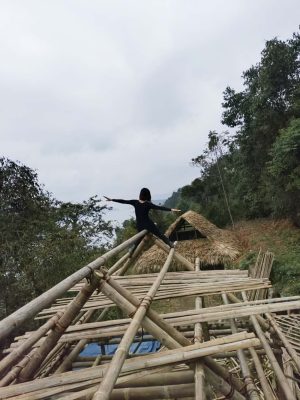
I do not know where the future will take me. Perhaps I will continue my work in research and teaching. Perhaps I will write books, sharing the stories and lessons I have gathered through my journey across different cultures. Perhaps I will become a speaker, bringing people together through stories of sustainable development, international cooperation, and the spirit of bamboo. Perhaps I will organize bamboo field study programs, educational initiatives, or business ventures inspired by the ecological and community values that bamboo represents. Perhaps I will become more involved in environmental, cultural, educational, and international cooperation activities. The forms may change as I move through different stages of life.
But one thing I know for certain. Wherever this path may lead me, bamboo will remain an important companion on my journey. Because the most valuable gift bamboo has given me is not merely a field of work or research. Bamboo has helped me understand myself more deeply. It has taught me to believe in the power of connection. And it has shown me that the most enduring things in life are often built slowly and quietly, much like the roots of a bamboo grove.
Perhaps that is the story of my journey with bamboo. And it is also the path I wish to continue walking.
- Master’s Thesis at Ritsumeikan University, Kyoto, Japan, 2013-2015
- From Energy to the Middle Corridor: Prospects for Strategic Cooperation between Vietnam and Azerbaijan
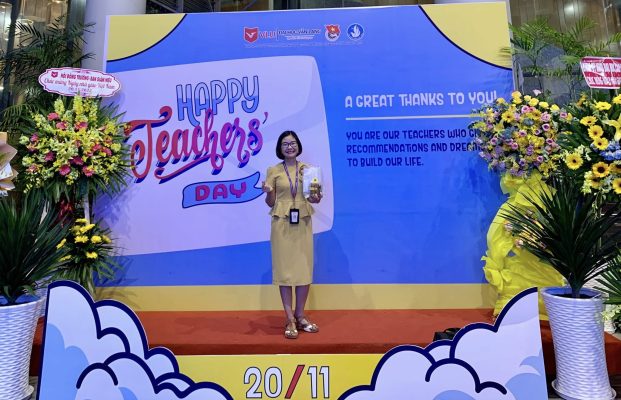
- Why I Became a Teacher?
- Doctoral Dissertation Proposal at the University of International Business and Economics (UIBE), Beijing, China (2023–2027)
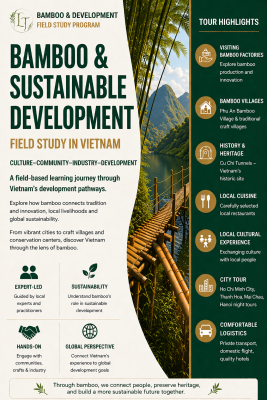
- Vietnam Bamboo and Sustainable Development Field Study Program
Bài viết cùng chủ đề:

Why I Became a Teacher?

From Energy to the Middle Corridor: Prospects for Strategic Cooperation between Vietnam and Azerbaijan

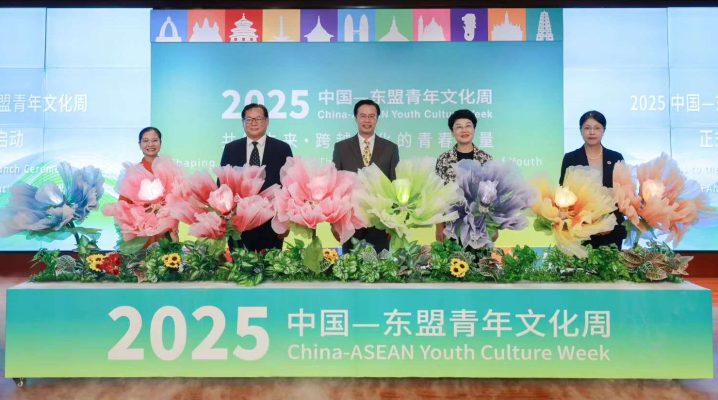
Asking the Way of Youth: China–ASEAN Youth and the Journey of Building Trust

Vietnam Bamboo and Sustainable Development Field Study Program

Dialogue on the Future of ASEAN–China Relations: The Role of Youth in Building Trust and Cooperation

People-to-People Exchanges: Linh Tran’s Perspective on ASEAN–China Cooperation

May 2026 Reflection: When the Streams Converge

An Encounter Beyond Expectations: When Life, Ecology, Art, and Philosophy Converge